From Reaction to Redesign: The SEL Skill Hidden in Everyday Frustration
Feb 11, 2026
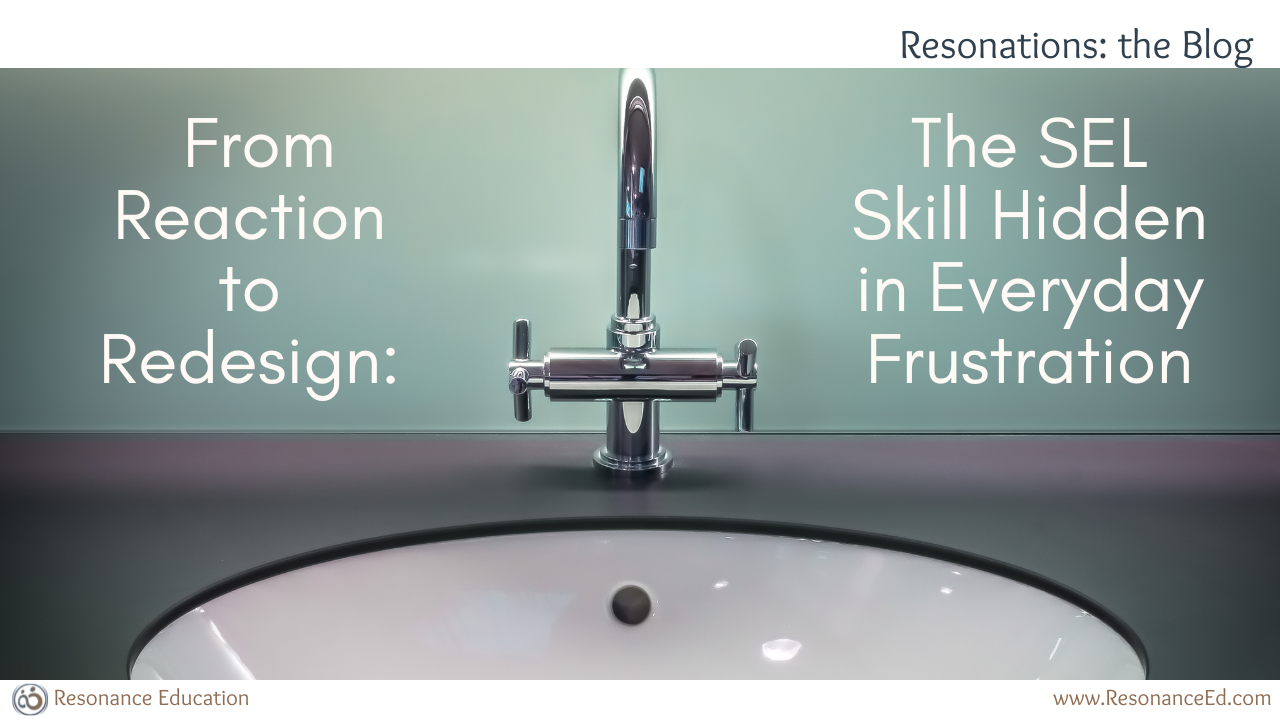
A few years ago, I walked into my bathroom several times throughout the day.
Each time, I placed my phone on the ledge of the sink.
And each time, I picked it back up and felt irritated because the back of my phone was wet.
Three separate trips.
Three separate moments of frustration.
Same exact outcome.
Eventually, I stopped and laughed at myself.
Why did I keep reacting to the same frustration over and over when the solution would take five seconds?
Dry the ledge.
Problem solved!
It was such a small moment. But like many small moments, it revealed something much bigger.
- How often do we react to patterns instead of redesigning them?
The Power of Pausing
That tiny moment reminded me why pausing matters. When we pause, we create space. And in that space, we gain the clarity to notice patterns that frustration has been trying to show us all along.
Without pausing, we stay in reaction mode.
With pausing, we gain the ability to redesign.
The SEL Connection
This pattern shows up everywhere:
In classrooms. In leadership. In relationships. In daily routines.
We encounter recurring frustrations, conflicts, and challenges.
We feel the same irritation. We respond in familiar ways.
And the cycle continues.
Social emotional learning gives us the tools to interrupt those loops.
- Self-awareness helps us recognize patterns in our emotions, behaviors, and environments. It allows us to notice when frustration is becoming predictable rather than situational.
- Responsible decision-making gives us permission to pause long enough to ask a different question. Instead of reacting automatically, we begin asking:
What small change could prevent this from repeating?
Drying off the ledge reminded me that sometimes the most effective response is not managing frustration. It is redesigning the situation that keeps creating it.
Why This Matters in Schools and Leadership
Students and educators experience these loops constantly.
Repeated conflicts between peers.
Repeated avoidance of challenging work.
Repeated frustration with academic or workplace expectations.
When these patterns continue without interruption, it is easy to assume the problem is ability, motivation, or behavior.
But when we model noticing patterns and adjusting systems, something powerful happens. We show students and colleagues that frustration can be information. And information creates opportunity.
Small adjustments can create meaningful shifts.
People begin to see themselves not just as reactors to their environment, but as designers of it.
That shift builds agency. It helps individuals recognize that they can influence their relationships, routines, and responses to challenges.
What Redesign Can Look Like in Practice
Redesign does not require massive change. Often, it begins with small, intentional moves.
- Name Recurring Patterns Out Loud
When the same challenge keeps appearing, pause and say: "I’m noticing this keeps happening. Let’s figure out why." Naming the pattern brings it into awareness and invites collaborative problem-solving.
- Invite Students to Redesign Routines
Ask questions like: "What part of this routine or task keeps causing frustration?" and "What small change might help?" Students often have insight into barriers that adults cannot see.
- Treat Frustration as Data, Not Defiance
When irritation shows up repeatedly, help students identify triggers. Explore alternative strategies together rather than responding with punishment or correction alone.
- Model Small System Shifts
Let students and colleagues see you adjust instructions, routines, or expectations when something is not working. Narrate your thinking so they understand that redesign is a skill, not a failure.
From Reactors to Changemakers
When we model redesign thinking, we help others realize something essential:
They are not stuck in patterns.
They have the power to influence them.
This mindset strengthens confidence, builds problem-solving skills, and fosters resilience that extends far beyond the classroom.
Reflection
What small frustration shows up repeatedly in your classroom, leadership role, or daily routine?
What simple shift might interrupt the pattern?